

Canonical Ubuntu 22.04 LTS is the latest long term support release of Ubuntu, one of the world’s most popular Linux distributions. As a Long Term Support release, Ubuntu 22.04 LTS will be supported for 10 years, receiving both extended security updates and kernel livepatching via an Ubuntu Advantage subscription (which is free for persona

As part of their fundamental, security-driven design, snaps are meant to run isolated from the underlying system. In most cases, the idea works well, and granular access to system resources using the mechanism of interfaces allows snap developers to ship their applications packaged with strict confinement. However, there are some scenario

How important security is for your application and digital services? “Very important”, this is the answer we get the most often from Product Managers and Executives. Nobody wants the malware to take advantage of the vulnerabilities of their applications. However, any access point to the internet can be an entry point for hackers. Consider

Linux Active Directory (AD) integration is historically one of the most requested functionalities by our corporate users, and with Ubuntu Desktop 22.04, we introduced ADsys, our new Active Directory client. This blog post is part 3 of a series where we will explore the new functionalities in more detail. The latest Verizon Data Breach rep
How to build a future-proof private cloud that offloads the operational complexity and allows you to focus on innovation and digital transformation.
The Operator Day at Kubecon EU 2022, hosted by Canonical, took place on Monday 16 May 2022. We thank everyone for attending the event. Our thanks go out especially to those who engaged with us via chat during the online event. We enjoyed answering questions and having conversations during the presentations. If you missed Operator

Improving Firefox snap performance is one of our top priorities. In part 2 of this series, we give an update on our progress and latest fixes.
If you are packaging your IoT applications as snaps or containers, you are aware of the benefits of bundling an application with its dependencies. Publishing snaps across different operating system versions and even distributions is much easier than maintaining package dependencies. Automated IoT software updates make managing fleets of d

Newsletter signup

Ubuntu Core is the operating system for IoT and edge Ubuntu Core, the Ubuntu flavour optimised for IoT and edge devices, has a new version available. With a 2-year release cadence, every new release is both an exciting and challenging milestone. Ubuntu Core is based on Ubuntu. It is open source, long-term supported (LTS), binary

The ultra-secure embedded Ubuntu introduces support for real-time compute in robotics and industrial applications. 15 June 2022: Canonical today announced that Ubuntu Core 22, the fully containerised Ubuntu 22.04 LTS variant optimised for IoT and edge devices, is now generally available for download from ubuntu.com/download/iot. Combined

OIS 2022 is over, but the OpenInfra community stays tuned for the next OpenInfra Summit, taking place in Vancouver in 2023! This year’s summit in Berlin offered a lot of insightful keynotes and technical sessions. Speakers discussed the most recent trends in the industry, including composable infrastructure and sustainable computing, and

The software operator is a design pattern. A design pattern describes the approach to cover the operational tasks of an application’s implementation. The first post in this series introduced the concept of a design pattern in general. The second post covers the software operator design pattern in particular. In the second part, we also ex

In the previous blog, SQL vs NoSQL Database, we discussed the difference between two major database categories. In a nutshell, the main difference between NoSQL and SQL is that NoSQL adopts a ‘right tool for the job’ approach, whilst SQL adopts a ‘one tool for all the jobs’. While SQL remains a standard in organisations

IT leaders, engineers, and developers must consider multiple factors when using a database. There are scores of open source and proprietary databases available, and each offers distinct value to organisations. They can be divided into two primary categories: SQL (relational database) and NoSQL (non-relational database). This article will
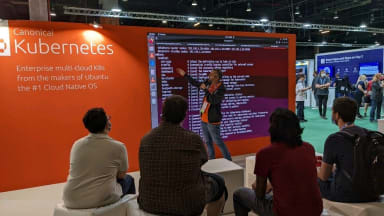
Last May, KubeCon gathered multiple tech enthusiasts, students, professionals, and companies. The event highlighted various topics and insights on how to collaborate on pushing the boundaries of cloud-native computing. One of our Engineering Directors, Mykola Marzhan, shared his knowledge about databases on Kubernetes at KubeCon, during a
In this blog, we’ll explore some of the main VM features that help you run your infrastructure on LXD.
Ubuntu tech blog
Deep dives for developers
Visit the Ubuntu Tech Blog for deep dives into product features, step-by-step tutorials, and the latest updates from Canonical's engineering teams.